Loading

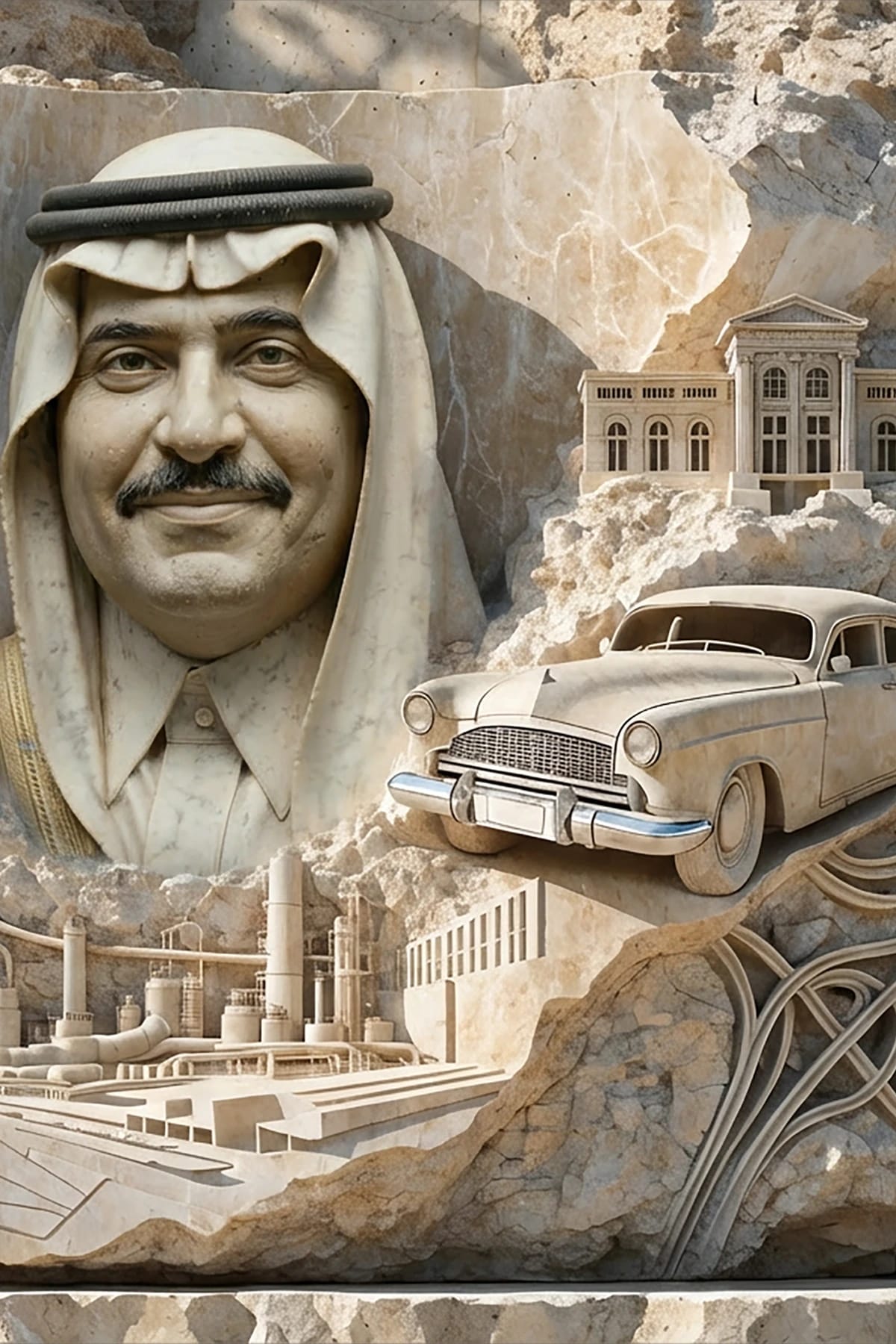
The Architect of Innovation
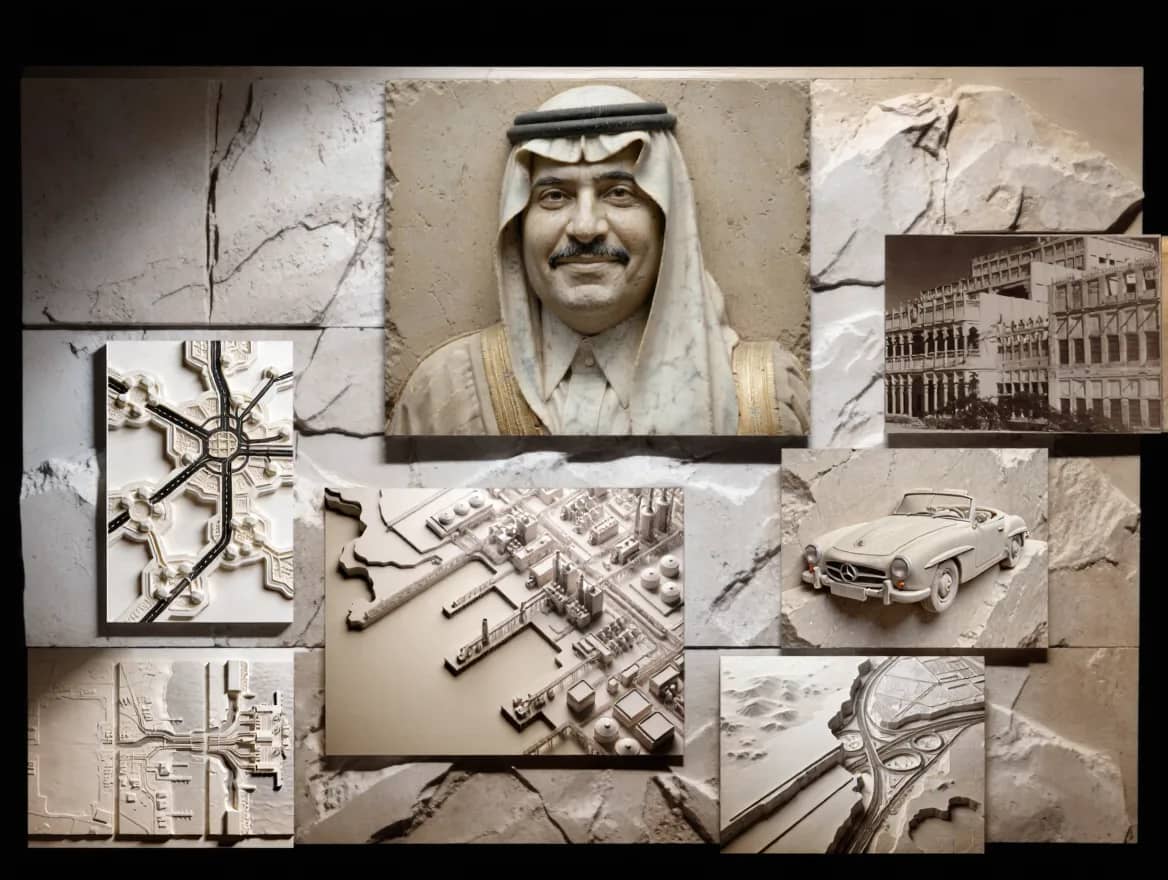
A monumental sculptural timeline documenting the evolution of Saudi Arabia’s Eastern Province under the governance of Prince Mohammed bin Fahd from 1985 to 2013. Architecture. Infrastructure. Industry. Urban systems. Translated into physical bas relief form.
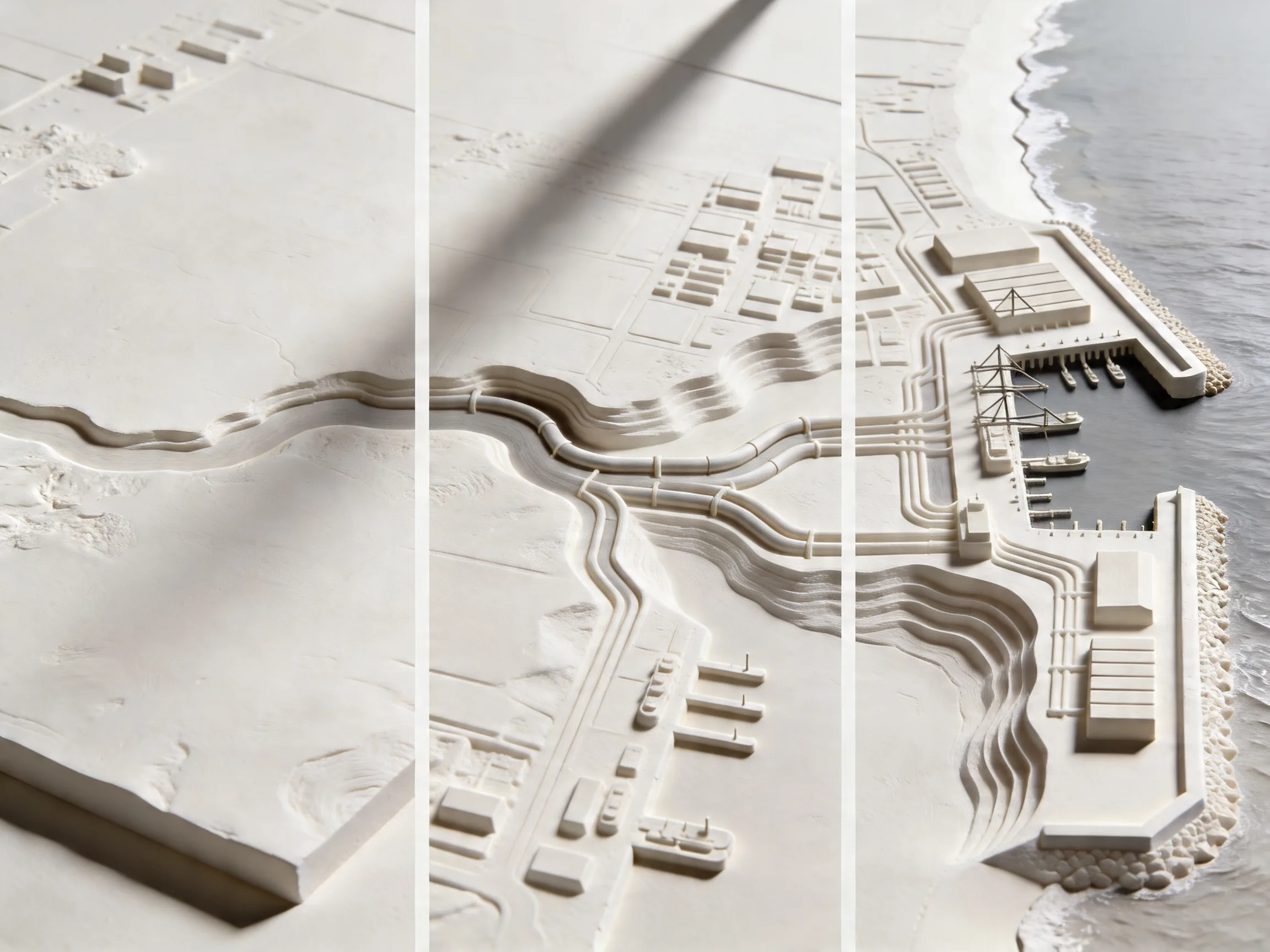
Engineered physical memory
From Desert Landscape to Integrated System
Between 1985 and 2013, the Eastern Province underwent one of the most significant urban and industrial transformations in the region’s modern history. Separate coastal cities became unified metropolitan systems. Road networks carved structure through undeveloped land. Industrial zones expanded toward the Gulf coastline. Ports connected Saudi Arabia to global markets. This project reinterprets that transformation through sculptural form. Not as an illustration and engineered memory.
IMAGINED TOGETHER
Public & Peronal Memories
The initial concept draft was drawn from puiblic resources.
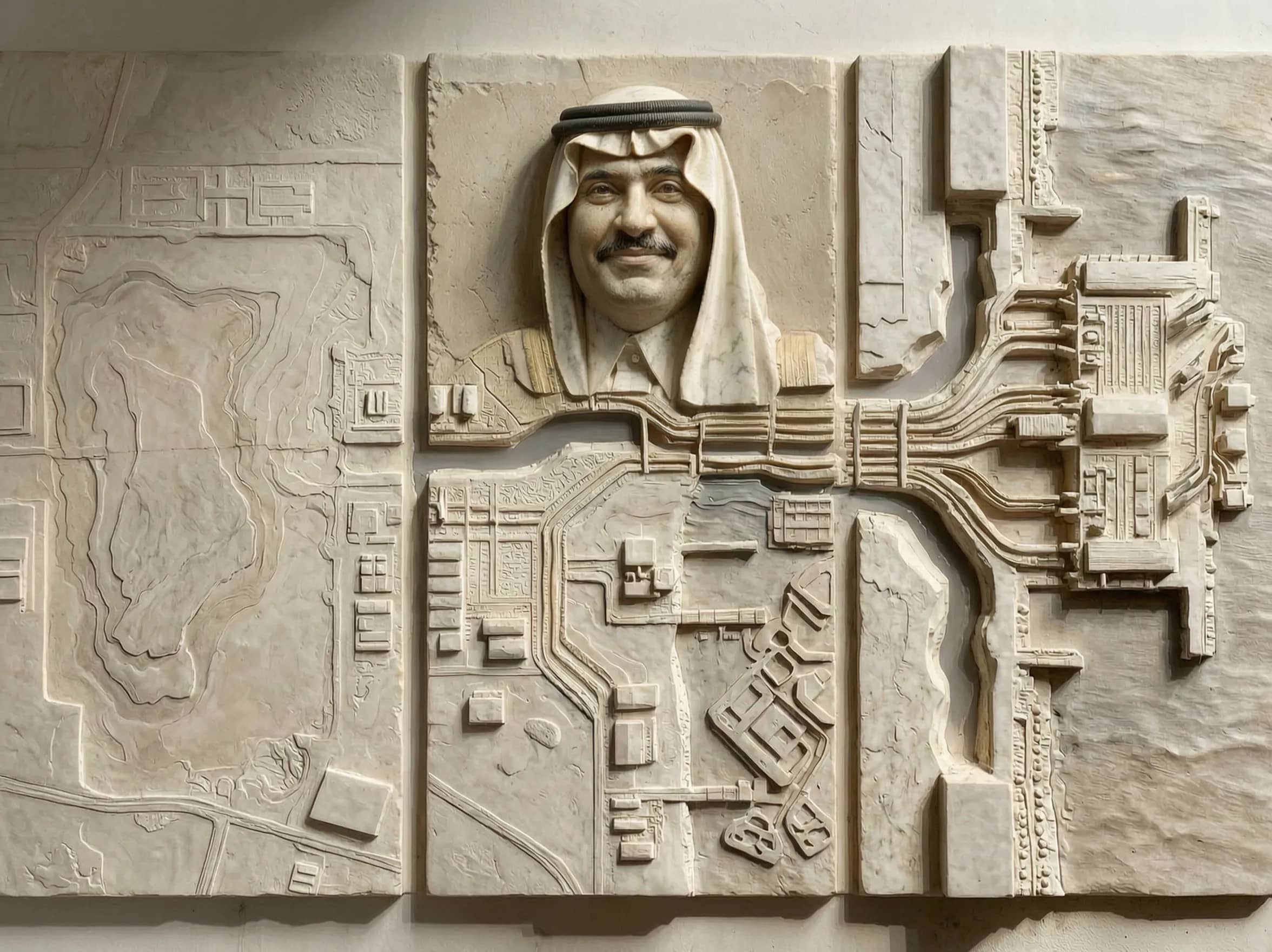
THE SIX CHAPTERS
The Timeline of Transformation
01 Metropolitan Integration
Three isolated urban centres evolve into one continuous metropolitan system.
02 Highway & Infrastructure Network
Transport corridors become the framework for movement, growth, and expansion.
03 Industrial Expansion Jubail Model
Industrial systems emerge at a monumental scale along the Gulf coast
04 Port & Coastal Development
The coastline transforms into a global export gateway.
05 Regional Network System
Cities operate as interconnected regional infrastructure nodes.
06 Modern Urban System
The province matures into a structured and balanced metropolitan environment.
MATERIAL & PROCESS
Designed for Physical Form
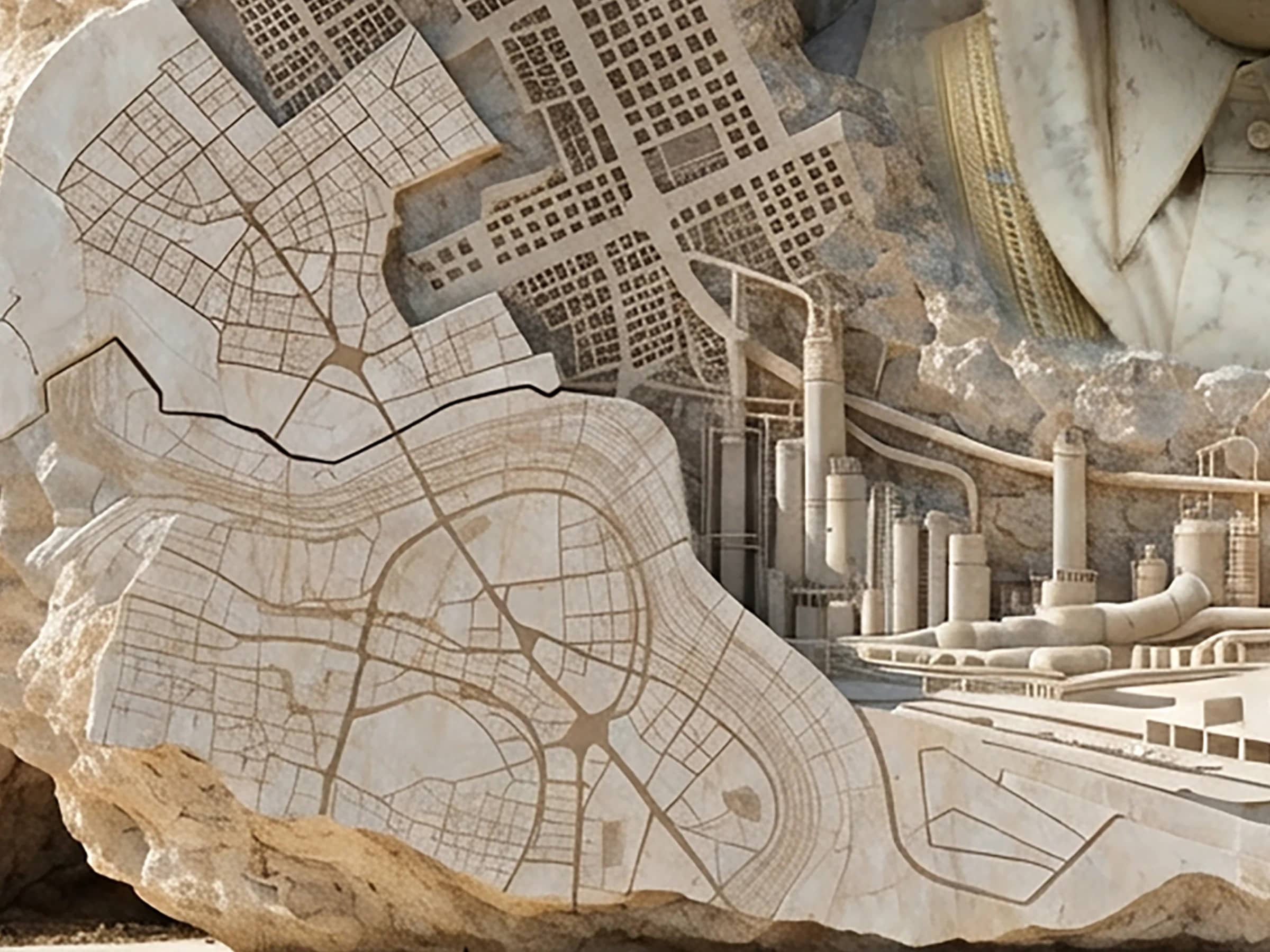
Every composition is developed through a fabrication-focused workflow combining historical research, architectural abstraction, and 3D bas-relief modeling. The work is designed not simply for viewing, but for carving. Roads become recessed channels. Urban blocks become raised masses. Industrial systems become sculptural geometry. The final outputs are intended for: * monumental stone carving * CNC fabrication * cast relief sculpture * architectural installation * engraved metalwork
DEPTH HIERARCHY
Sculptural Language
Element Relief Treatment Primary Infrastructure Deep recessed carve Secondary Networks Mid-depth carve Urban Grid Fine etched detail Industrial Zones Raised geometric mass Background Surface Flat plane
THE PHILOSOPHY
Infrastructure as Legacy
The project treats infrastructure, planning, and spatial organization as cultural memory. Highways, ports, industrial systems, and urban grids become more than functional systems; they become physical evidence of transformation across time. Each panel is designed as both artwork and engineered object: minimal, monumental, and permanent.

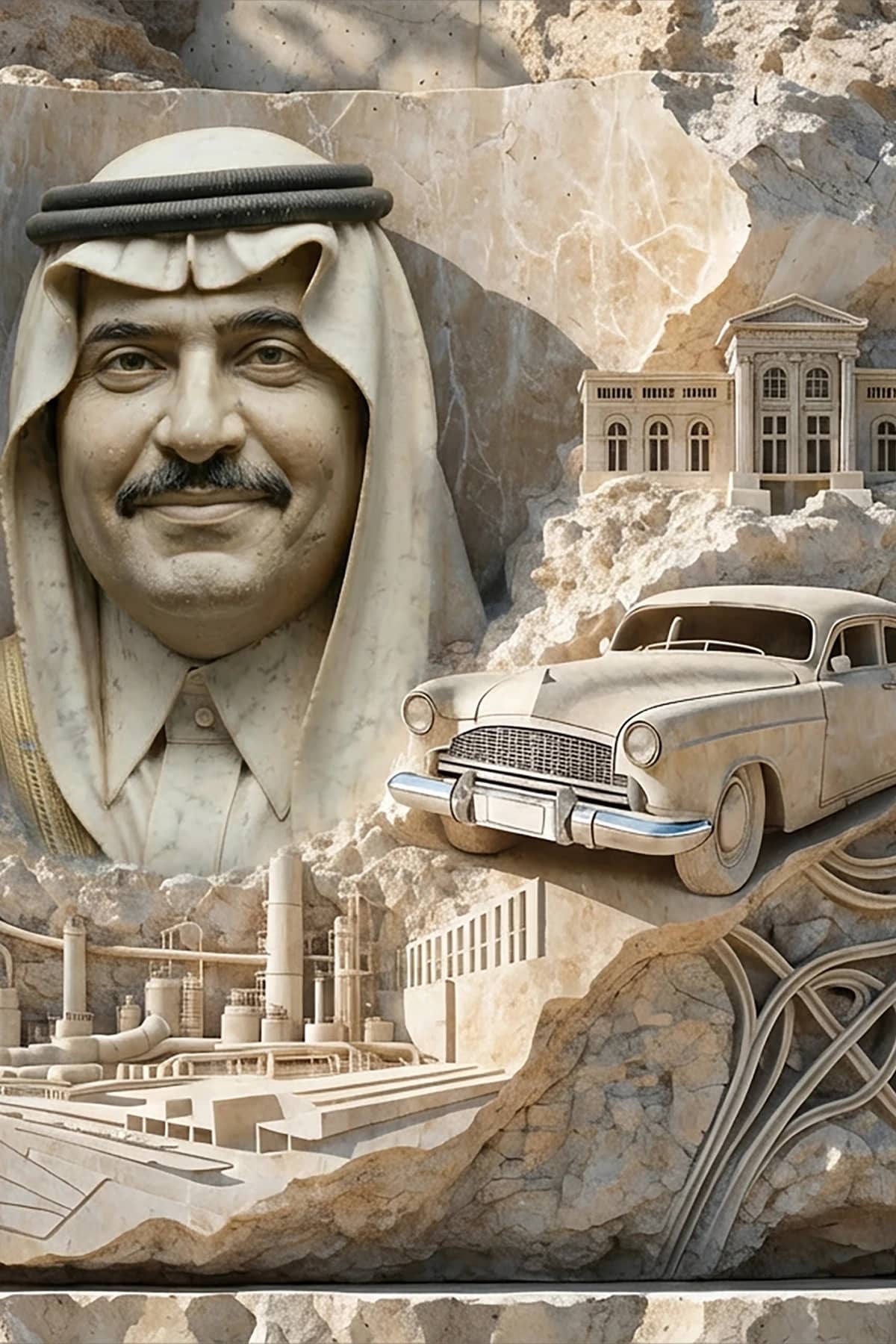
This is not a traditional historical archive.
A Monument to Transformation
It is a sculptural interpretation of how a region evolved through planning, infrastructure, and long-term development preserved through carved form and monumental scale.